Why Tailored Web Design Matters for Small Businesses
Visitors judge a site within moments, and for small businesses competing in crowded markets, a generic, cookie-cutter site rarely earns a second look. Small businesses often operate with tight budgets and limited time, so every decision on a website needs to work toward measurable business growth. Tailored web design supports business goals by aligning every design decision with a specific outcome: lead generation, online stores, service bookings, or brand awareness.
A tailored website reflects the business’s identity and specific goals, rather than forcing a business into a one-size-fits-all template. This matters because a tailored web design helps build brand credibility and attraction. When visitors land on your site and see a cohesive, professional experience, they are more likely to stick around.
A branded website builds trust and strengthens customer connections. Research from the Nielsen Norman Group describes how trustworthiness is communicated through design quality, up-front disclosure, current content, and links to the rest of the web, such as external reviews. Poor design, such as broken links, cluttered layouts, and inconsistent branding, undermines that trust immediately.
If your site looks outdated or generic, you are making it harder for new customers to trust you.
What Professional Web Design Includes
When people hear “web design services,” they might picture someone picking colors and fonts. In reality, professional web design services go far deeper.
A professional web design company bridges the gap between your business objectives and what your end users actually need. This includes strategic consultancy, UX design, responsive web design, performance optimization, accessibility, SEO fundamentals, and content strategy. Web design services vary widely based on complexity, from simple brochure sites to full ecommerce web design builds.
Strategy shapes every aspect of professional web design. Without a strategy phase, you end up with a site that might look decent but fails to convert. A proper strategy defines your business goals, audience segments, competitive landscape, and functional requirements before a single pixel gets designed.
Web design services include DIY platforms and full-service agencies, but professional web design improves user experience and builds trust in ways that self-service tools rarely match. At larger agencies, essential design services for growing brands typically include:
-
UX research and information architecture
-
Responsive and mobile friendly layouts
-
Brand identity development (logo, color palette, typography)
-
Custom forms, CRM integrations, and third-party APIs
-
Performance optimization and security (including SSL certificate setup)
-
Conversion rate optimization and analytics
Key Factors Behind High-Performing Websites
Not all websites perform equally. Here are the key factors that separate high-converting sites from ones that lose visitors.
Clear navigation ensures users find what they need without frustration. Poor navigation increases bounce rates and hurts conversions. In 2026, every web page should function like a home page, so even deep pages need to clearly signal what the business does and include visible calls to action that guide visitors to the next step.
Fast loading speeds are non-negotiable. Fast loading times improve user experience and retention, and slow pages send visitors back to the search results. Compress images, keep scripts light, and test on a real phone before launch.
Visitors form an impression of a business in seconds, so every moment of delay works against you.

Mobile friendly layouts are essential. Tailored responsive design ensures usability on mobile devices, but true mobile optimization goes beyond shrinking a desktop layout. It means prioritizing content structure, enlarging tap targets, simplifying interactions, and rethinking navigation for vertical scrolling. Responsive design ensures usability across all devices, and testing on real phones catches what a desktop preview misses.
Design choices connect directly to conversions. Visual hierarchy, whitespace, color contrast, and button design all influence whether a visitor takes action. More salient call-to-action buttons, with strong color contrast, strategic placement, and clear wording, can increase click-through rates and downstream funnel conversions.
Building a Custom Website Around Your Brand
A custom website does more than look good. It reflects the priorities of your specific business in every layout, color choice, and interaction.
Custom design highlights your personality and value proposition. For a local service provider or an online retailer, the site’s visual language should instantly communicate who you are. A luxury brand needs a different aesthetic than a budget-friendly one. A tech startup requires a different tone than a family restaurant.
Branding affects how audiences perceive your website and business. Your visuals, including logo, color scheme, photography style, and iconography, carry the tone your target audience expects. Applied aesthetics like color and typography legibility play a role in perceived credibility.
A website inconsistent with brand image is a missed opportunity. Every page should reinforce who you are.
Consistent branding builds customer loyalty and retention. This extends to typography: using consistent font families, weights, and scales ensures visual coherence, improves readability, and reduces cognitive load. Fewer font families also reduce page weight and layout shift, which helps performance.
Effective web design can enhance brand recognition and loyalty when page layouts are designed with purpose. Above-the-fold content should lead with your value proposition and a clear CTA. Below-the-fold content supports with social proof, features, and conversion cues. Grid systems and established scanning patterns (F-pattern, Z-pattern) help structure information so it flows naturally and guides users through each page.
Your brand story should be visible in every element, not buried on an About page that nobody visits. I suggest a short, plain brand story near the top of the home page so visitors understand the business at a glance.
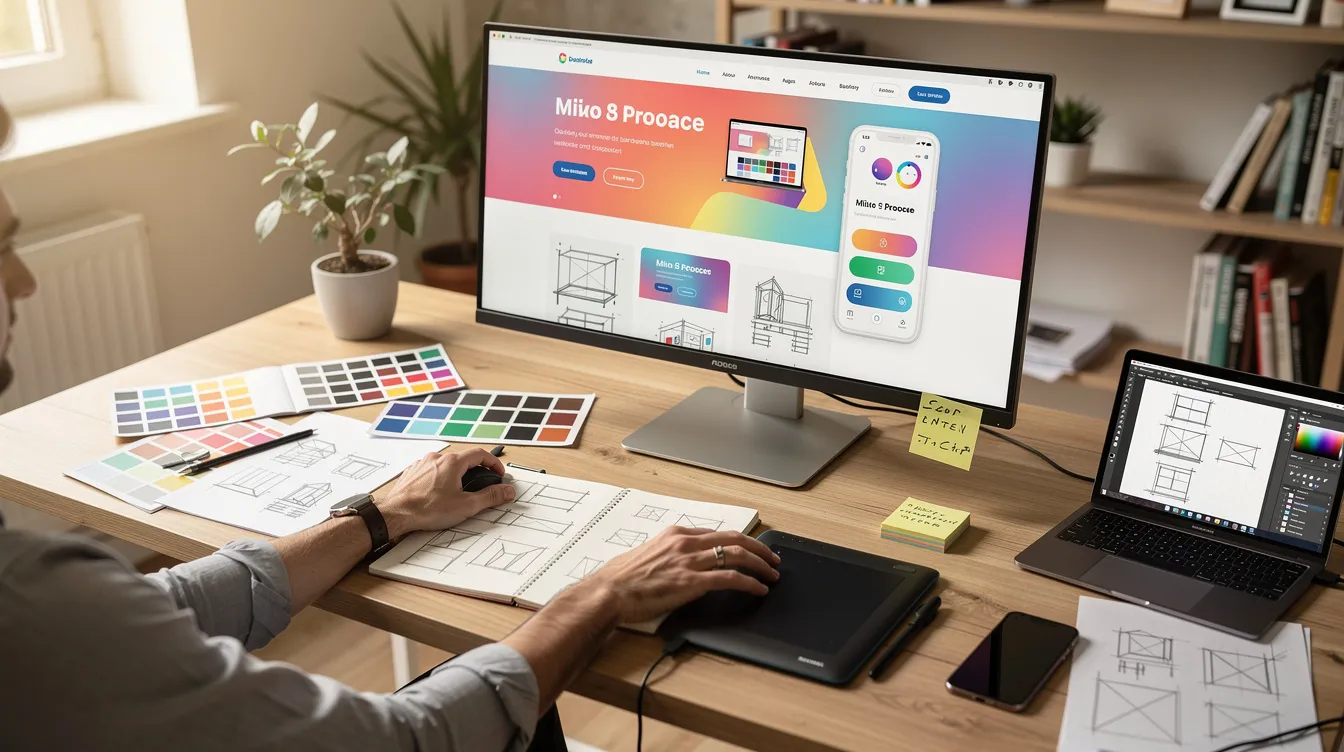
Essential Features for a Successful Business Website
Every small business website needs essential pages to convert visitors. Without the right foundation, even beautiful design falls flat.
Here are the essential pages most business websites need:
| Page | Purpose |
|---|---|
| Home page | Establishes value proposition, guides users to key actions |
| About | Tells brand’s personality and builds credibility |
| Services/Products | Details offerings for new customers |
| Case Studies/Portfolio | Provides social proof and demonstrates expertise |
| Blog/Resources | Supports SEO, educates audience, provides more insights |
| Contact | Makes it easy to reach you |
| FAQ | Addresses common objections before they stall a conversion |
| Privacy/Terms | Legal pages and a trust signal |
A website should be built to generate leads and support sales, because that is its job. A well-designed website works when each page has a clear purpose tied to a conversion path. You can see how I plan this for a real trade on my florist website page.
Prominent calls to action should appear on every significant page. Button size, wording, and placement can affect click rates. Use action-oriented language like “Get a Free Quote” or “Request a Consultation” rather than passive labels like “Submit.”
Trust-building customer proof reduces perceived risk. Include testimonials, ratings, certifications, and client logos where visitors will see them early, on your home page and service pages especially. Real photos and specific details in genuine customer stories carry more weight than vague praise.
Accessible contact options matter. Display your email and a contact form prominently. For local businesses, add your address and map integration. Custom websites allow for integration of various functionalities and tools like appointment booking or CRM-connected forms, and custom layout maps directly to customer buying behavior.
Website Design Services for Local Businesses
Local businesses have a clear advantage: geography. Your website design services should lean into that advantage, not ignore it.
Local businesses benefit from targeted messaging that is location-aware. Neighborhood-specific copy, localized testimonials, and references to community involvement build relevance and trust with your local market in ways that generic copy never will.
Location-specific landing pages are a must. Creating separate pages for each city or neighborhood you serve allows better SEO targeting for local searches, more relevant content (store hours, maps, local staff), and improved search engine visibility. Tailored builds incorporate clean architecture and local SEO so that your site can show up when nearby customers search for your services.
Map integration adds credibility and practical value. Embedding interactive maps with directions helps customers find your physical location and signals that you are a real, established business.
Locally relevant calls to action can work better than generic ones. CTAs like “Book an Appointment” or “Get Directions” speak to local searchers. On mobile especially, tap-friendly buttons are critical. Effective SEO strategies improve visibility and attract potential customers in your area, and a well-designed site is essential for visibility across search engines.
The Professional Web Design Process
Understanding the web design process helps you evaluate whether a web design agency is approaching your project strategically or just winging it.
The initial discovery stage involves understanding your business goals, target audience, competitive landscape, existing brand identity, technical constraints, budget, and timelines. Deliverables from this phase typically include stakeholder interviews, user personas, competitor audits, and project briefs.
Audience research defines who your website is for. This means creating personas based on user behavior, pain points, and motivations. It may include reviewing analytics on your current site, such as bounce rates, heatmaps, and session recordings, to understand what is working and what is not. This research shapes content, navigation, tone, and interaction flows. A deep understanding of how your audience perceives your business separates effective web designers from those who design in a vacuum.
Wireframe development maps out your site before any visual design begins. Wireframes outline page structure, content placement, navigation paths, and CTA positions. Custom web development solutions are planned from scratch during this phase, structured around the sitemap and content architecture. Custom sites are designed to grow alongside the business’s needs, so this structural planning phase is essential for long-term scalability.
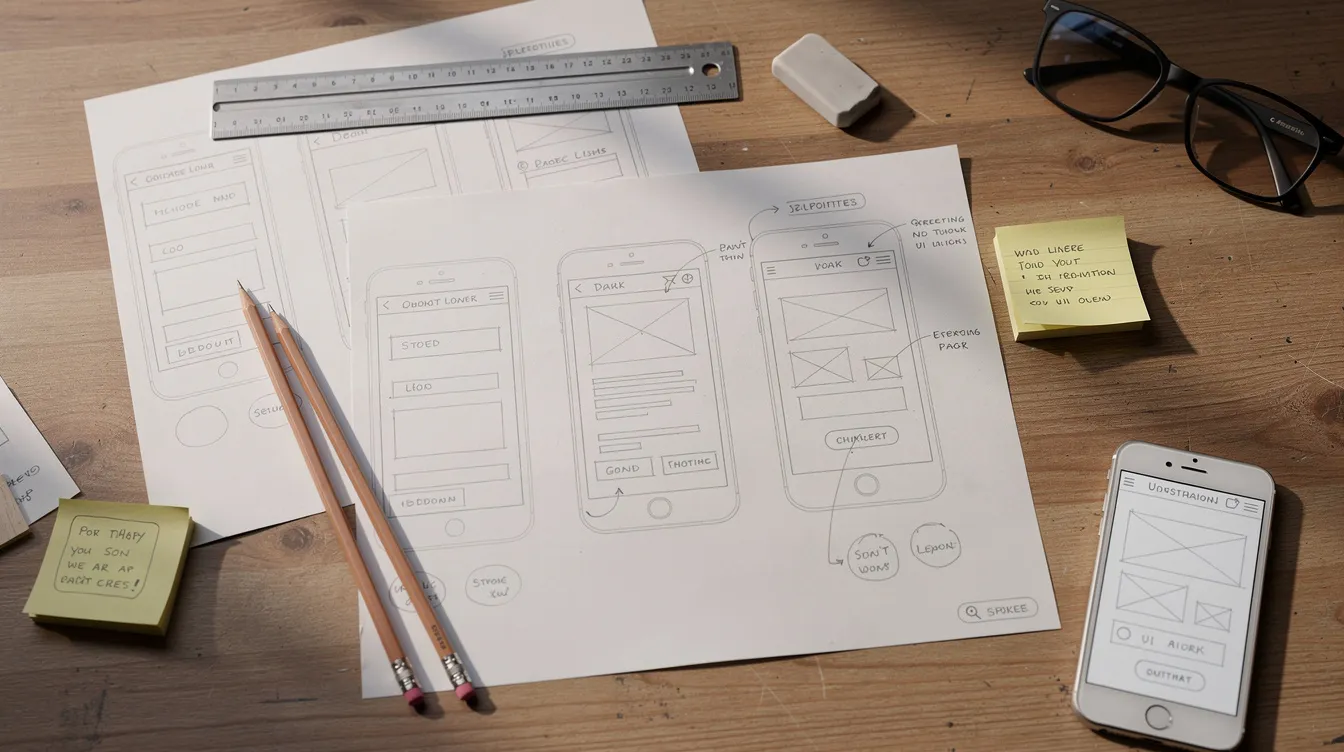
From Strategy to Launch
Once wireframes are approved, visual design approvals bring the site to life. Brand assets, such as typography, colors, imagery, and style guides, get applied to key page mockups. Multiple design iterations ensure alignment between stakeholders and designers. This is where your brand identity becomes tangible on screen.
Website development translates approved designs into functional code. At an agency this can include front-end coding, responsive behavior, content management system setup, and integrating required tools like ecommerce platforms, payment gateways, forms, and CRM systems. I build light static pages with a contact form and no CMS or store. Custom sites can connect seamlessly with specific operational tools your business already uses. Custom design can save time by automating everyday tasks like form submissions, appointment scheduling, and data syncing.
Content integration involves writing or migrating content, optimizing for keyword research and SEO (metadata, alt text, structured data), and ensuring everything aligns with your brand voice. Content is the fuel that makes your design work, and without it even the best-looking site underperforms.
Prelaunch testing covers:
-
Cross-browser and device compatibility
-
Functional testing (forms, links, checkout flows)
-
Checking for broken links
-
Performance tests against Core Web Vitals
-
Accessibility checks against accessibility guidelines
-
Security testing
-
SEO checks (redirects, sitemap, robots.txt)
This phase catches problems before your clients or new customers see them.
Choosing the Right Web Design Company
Your choice of web design partner will shape the outcome of your entire project. Here is what to evaluate.
Agency experience matters. Look for a website design company with a track record in your industry or business size. Can they handle custom builds, or do they only reskin templates? Ask for case studies that show real outcomes, not just pretty screenshots. The right design company should stay current with trends and technologies.
Portfolio examples should demonstrate design consistency, usability, speed, and mobile behavior. Look for evidence of branding work, UX flows, and trust elements.
Communication practices reveal how smooth your project will be. Clear processes, defined milestones, responsive feedback cycles, and transparency about delays or revisions are non-negotiable. Ask what collaborative tools they use and who handles content, copy, and ongoing support. I work by email, so every decision is written down and easy to find later.
Ongoing support options are essential. Ensure post-launch support options are available when choosing a provider. This includes maintenance, updates, security patches, performance monitoring, and backups. A new site is not a one-and-done project, because it is an asset, and maintaining websites takes work over time. Ask what is included versus what costs extra, and whether they support future scalability and other services beyond the initial launch.
Key Factors for Comparing Design Companies
When evaluating web design companies side by side, focus on these criteria:
Project timelines vary by scope. A simple website takes less time than a complex one:
| Project Type | Typical Timeline |
|---|---|
| Small brochure site | A few weeks |
| Professional business site | Several weeks |
| Ecommerce web design | Longer, by scope |
| Custom web apps | Longest |
Delays most often come from slow client feedback or missing content, not the design company.
Pricing transparency is critical. Understand exactly what is included: number of pages, revisions, custom features, hosting recommendations, SEO, and maintenance. Watch for hidden costs like license fees, plugin subscriptions, and SSL certificates. My pricing page lists what each package covers.
Platform expertise should match your long-term needs. Whether the company specializes in WordPress, Shopify, or custom frameworks, ensure their skills align with your digital marketing solutions, mobile app development requirements, and web development goals.
Measurable case studies separate strong agencies from mediocre ones. Request case studies that describe what changed in leads, conversion, traffic, and revenue, not just before-and-after screenshots. Look for notes on bounce rate, speed improvements, and search visibility.
Tailored Web Design Costs and Project Timelines
Pricing for tailored web design depends on several factors:
-
Number of pages
-
Level of custom design versus template usage
-
Feature complexity (ecommerce, memberships, integrations)
-
Content creation or migration
-
Performance optimization requirements
-
SEO and accessibility needs
-
Ongoing graphic design and marketing materials needs
Template-based web design uses pre-designed templates, which are cheaper and faster but offer limited flexibility for branding, uniqueness, and performance. Tailored design can provide better user experience compared to generic templates, with better alignment to your brand, stronger conversion optimization, and more room for custom solutions.
The trade-off is real: a cheaper template might save money upfront but limit your online success, competitive edge, and ability to generate leads over time. Custom design is an investment in long-term business growth.
Realistic project timeframes range from a few weeks for a simple brochure site to several months for complex ecommerce or web application builds. The biggest timeline risks come from delayed client deliverables such as copy, images, and feedback. Building a strong foundation early in the project (during discovery and wireframing) prevents costly rework later.
Turn Your Website Into a Growth Tool
Your website is more than a digital brochure. It is the engine behind lead generation, sales, and long-term customer loyalty, and a branded website strengthens customer connections and builds trust every single day.
Before starting a new site or redesigning your current one, define your website goals. Are you focused on building brand awareness, driving ecommerce sales, booking services, or establishing a local presence? These goals guide every design decision from layout to CTAs to content.
Start by auditing your current site. Gather your analytics. Set measurable KPIs for traffic, conversion rate, bounce rate, and speed. Then work with a web design partner who uses a strategic, data-driven process to build websites around those goals.
Your online success starts with a site designed specifically for your business, not someone else’s. If you would like to talk it through, send me a note on the contact page and I will reply by email.