A good DJ website gives you a place that social media algorithms can never take away, and a clearer way to present your sound, experience, services, and availability than social media alone. I wrote this guide step by step, from defining your brand and creating a strong homepage to showcasing music, promoting events, setting up essential pages, improving mobile navigation, finding design inspiration, and launching your site. Good content is the thread through all of it. A DJ website works as both a digital portfolio and a booking system for fans and potential clients.
Define Your DJ Brand Before Designing
Before you create a single page, clarify your brand. A clear and appealing visual identity should match your musical style, and a DJ website should showcase that style and share your work effectively.
-
Identify your primary audience. Underground techno fans expect a dark background and moody visuals. Corporate event bookers want polished, professional images. Weddings call for a warmer, classy tone. Knowing your audience shapes every design decision.
-
Choose a recognizable visual direction. Pick two or three colors and stick with them. Use a style board: collect album covers, flyers, and photos that inspire you, then derive your palette. It is a fun step, and it pays off in every later choice.
-
Match typography with your performance style. Bold sans-serif fonts suit high-energy EDM. More refined typefaces work for ambient or classy lounge sets. A DJ website must communicate your style and musical identity immediately, and a unique style is easier to remember than a generic template.
Plan a High-Impact DJ Website Homepage
Club bookers and event planners scan DJ sites quickly. If they do not see what they need when they enter the homepage, they leave. The homepage should include essential elements like your DJ name, a hero image, and a booking button.
-
Place your artist name above the fold in large, readable text so visitors know exactly who you are.
-
Feature one focused call to action. A clear call-to-action button is essential for engagement. Choose “Book Me,” “Listen Now,” or “Latest Mix,” but do not overload the page with options.
-
Introduce your latest release prominently using a streaming embed or album artwork.
-
Use images that reflect your personality, such as crowd shots, studio setups, or abstract visuals that tell your story at a glance, so the homepage stands out from the rest.
Create a Good DJ First Impression
Write a concise value proposition that tells visitors what makes your sound distinctive. Something like “Festival DJ known for high-energy techno sets blending live percussion” says more than a paragraph of generic text.
Highlight your strongest professional achievement: a festival residency, a chart position, a collaboration. The right design makes achievements visible without requiring visitors to read walls of text. Show what makes you a good DJ worth remembering, and keep the tone fun and confident. If a manager, booking agent, or sound crew is part of your team, mention them too, because bookers like to know who they will work with.
Use Background Video Strategically
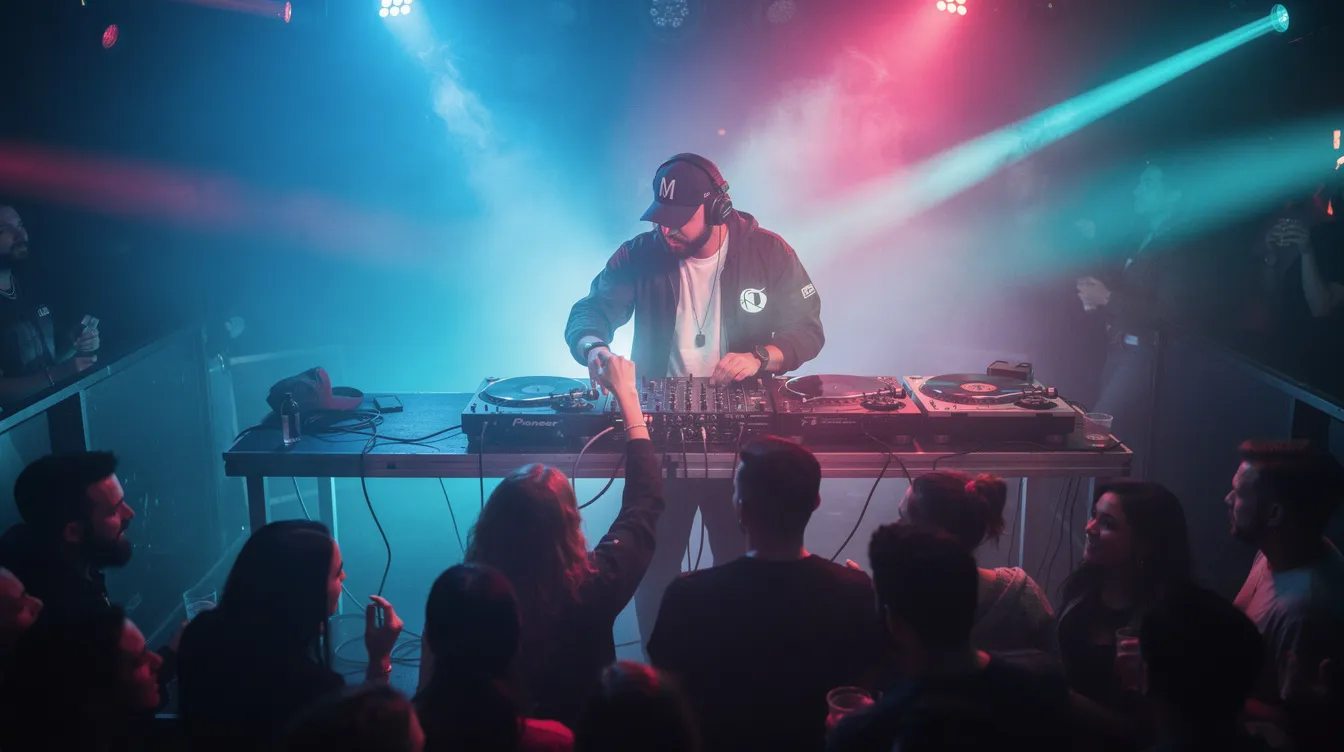
A background video can enhance the visual appeal of a DJ website when used correctly. A short looping clip that matches your style is an excellent way to reinforce brand identity.
-
Select footage that matches your musical identity. High-energy crowd shots for festival DJs, atmospheric visuals for ambient sets.
-
Add a readable text overlay. Use a semi-transparent dark layer behind text so it stays visible across changing frames.
-
Compress video files before uploading. Strip the audio track, keep loops short, and encode in a web-friendly format so pages stay fast.
-
Provide a static fallback image for mobile devices or slow connections.
Showcase Electronic Music Effectively
Your own music is the core of your brand. Embedding audio players lets visitors listen to mixes directly on your site without leaving the page.
-
Embed a prominent music player using Spotify, SoundCloud, Bandcamp, or Beatport widgets.
-
Organize releases by project. Group EPs, albums, and side projects with album art and release dates across different sections.
-
Feature selected live mixes and YouTube videos to demonstrate your performance talent. Curate rather than overload.
-
Link listeners to streaming platforms so fans can explore your own music on their preferred platform, whether that is Spotify, Apple Music, or YouTube.
Promote Tours, Events, and Bookings
Display upcoming performances clearly with date, venue, and city in chronological order. A clean list of events keeps shows front and center and makes the page fun to browse. Past gigs belong on the page too, because they prove you are active.
-
Add direct ticket links for each event so visitors never have to search elsewhere.
-
Include a dedicated booking button in your header or sticky navigation so potential clients can connect with you instantly.
-
Separate public events from private bookings. Weddings and corporate gigs need a different tone than club shows, so keep these in distinct sections.
Build Essential DJ Website Pages
Every DJ website needs these essential pages:
| Page | Purpose |
|---|---|
| Biography | Tell your story: influences, achievements, unique style |
| Press Kit (EPK) | An Electronic Press Kit gives promoters all necessary DJ information in one place: hi-res photos, logos, rider, bio |
| Services | List the events you play and the DJ services you offer, such as weddings, clubs, and corporate parties |
| Contact | A booking page should include a simple contact form and event details |
| Shop | Sell merch, vinyl, or digital downloads |
On the builder side, a DJ-focused website builder with a drag-and-drop interface can be a quick start, and some include music sales and marketing support. Wix also offers templates for DJ services. WordPress remains a flexible platform if you want full control, and WordPress themes can handle a music player and an events list well. Choose the builder or platform that fits your skill level and budget, and keep in mind that a custom build gives you the most control over features and your own website.
Establish Trust With Strong Visual Proof
High-quality photographs can effectively showcase your style. A full-screen image with a transparent header is a simple yet powerful design choice that lets the photography do the heavy lifting.
-
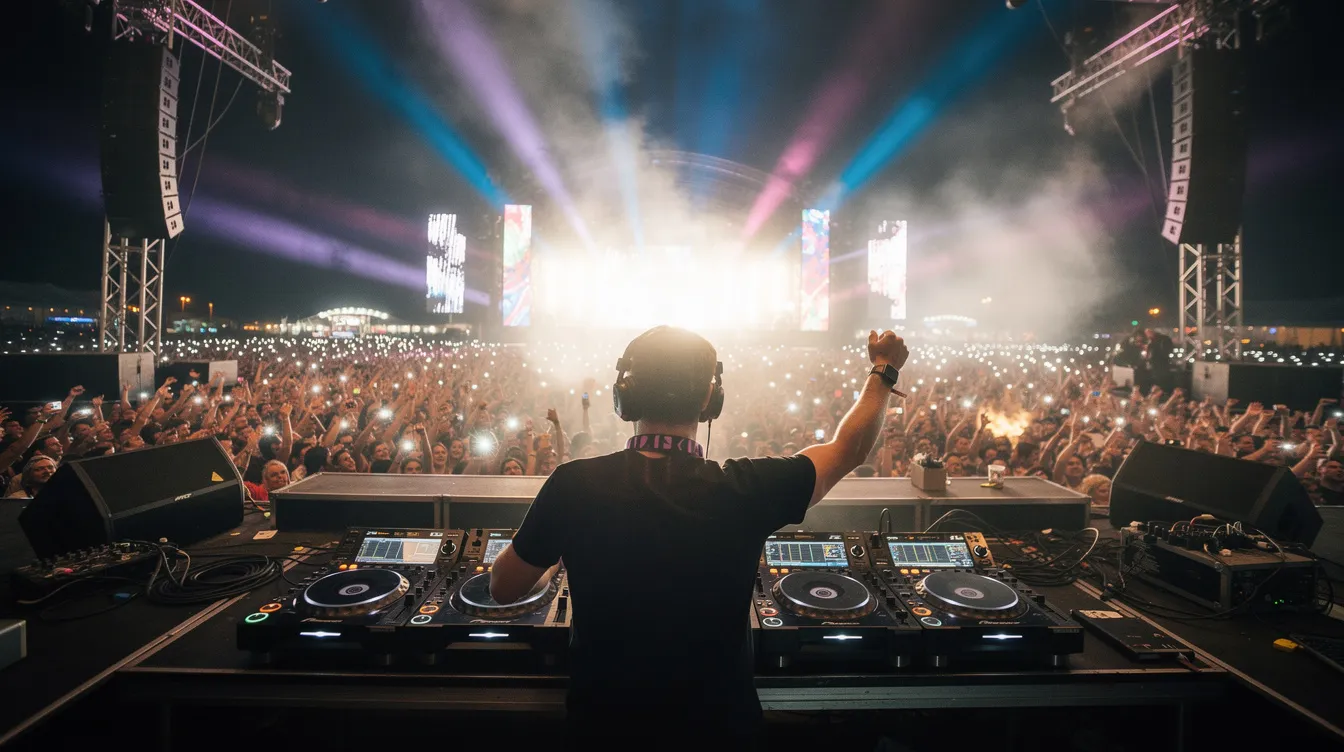
Display performance photography that shows you in action under professional lighting.
-
Feature client testimonials. Real quotes from happy clients build credibility and trust for potential clients visiting your website. Only use ones you have permission to share.
-
Showcase recognizable venues with logos or crowd images from your biggest gigs.
-
Include relevant press coverage: review snippets, interview links, media logos.
Design Navigation for Fast Discovery
A good DJ website should feature easy navigation. Keep your primary navigation concise, five to seven items at most: Home, Music, Events, About, Contact, Shop, Press.
-
Use descriptive menu labels. “Music” is clearer than “Universe.”
-
Social media icons should be prominently displayed on a DJ website. Social media integration connects your site to platforms like Instagram and TikTok. Place icons in the header or footer and open them in new tabs.
-
Make contact access immediate. A persistent “Book” button keeps the action ready for any visitor who wants to sign up for a date.
Improve Mobile Performance and Accessibility
Mobile responsiveness is critical for a DJ website because many visitors use smartphones. Fast loading speed is essential to prevent visitors from bouncing.
-
Test layouts across mobile devices using real phones, not just emulators.
-
Optimize images with modern formats like WebP and lazy-load anything below the fold.
-
Maintain strong text contrast so text over dark or video backgrounds stays easy to read.
-
Add captions to promotional videos. Many people watch without sound, and captions support accessibility.
DJ Website Design Inspiration
Minimalist Artist Websites
Study restrained colors, such as a single accent against a dark background. Prioritize one memorable visual and limit homepage copy. Keeping things simple lets your music speak.
Immersive Electronic Music Experiences
Examine experimental page transitions and interactive music features that connect motion with brand identity. These sites inspire creative approaches to design where every element shares your personality with the crowd.
Event-Focused DJ Websites
Review visible booking pathways, compare event information layouts, and assess ticket purchasing flows. The goal is making it easy for fans and bookers to sign up or buy without friction. SEO helps potential clients discover a DJ website through search engines, so remember to optimize page titles and meta descriptions. For a local, booking-led layout from another trade, see my gym website page.
Launch and Promote Your DJ Website
You are ready to go live once the basics are done. Here is your launch checklist:
-
Connect a custom domain that matches your artist name.
-
Verify every booking form by sending test inquiries to confirm they work.
-
Install analytics tracking to learn how visitors interact with your site, and monitor clicks on “Book,” “Listen,” and ticket links.
-
Promote the website across social channels. Share the link in your bio, email signature, and streaming profiles.
-
Keep your content fresh. Add new mixes, events, and photos so the site always shows what is happening now.
Your own website is the one platform you fully control. I hope this guide helps you build a more effective DJ website that works as hard as you do. If you want help, send me a note on the contact page and I will reply by email. My pricing page shows what each plan includes.