Prices for web design vary so widely that the word “affordable” confuses almost every small business owner. The cheapest website ads in your social feed rarely deliver anything custom, and big agency quotes assume enterprise budgets. The reality for most small businesses sits between those extremes: a genuinely custom site, built around your brand and goals, priced by scope and provider type.
This guide is for the reader who wants a uniquely branded website, not a generic template with a logo swap, at a price a startup, solo professional, or owner-managed business can justify. If your site needs to build trust, generate leads, or sell products, the visual and structural choices matter. You do not need an enterprise budget to get them right.
The options ahead cover seven distinct paths to an affordable custom web site in 2026: boutique studios, budget packages, subscription design services, niche specialists, freelancer hybrids, semi-custom template builds, and ultra-budget offers. Each trades off price, uniqueness, and ongoing support differently. The criteria below favor value for money, true custom work, and real-world fit for small businesses over the lowest possible number. I build sites for small businesses myself, so I wrote this from the side of the owner who pays.

How to Judge the Best Affordable Custom Website Options
The goal is to balance custom design, business impact, and total cost of ownership over 12 to 24 months. Many “best website builder” lists rank platforms by feature count or free plan availability. That approach misses what matters for a business investing in a custom site: whether the finished product earns its cost back through leads, sales, or credibility. Knowing what is included in quotes keeps pricing transparent, and businesses that need to sell online should also check whether packages include a domain, hosting, SSL, email, and maintenance. Judge every option here against clear, business-relevant criteria.
Key Evaluation Criteria
-
True “custom” capability: Can the provider design around your brand, content, and goals? Swapping colors on a canned template is not custom. The line between customized templates and bespoke design matters.
-
Pricing transparency: Does the provider publish clear starting prices and typical project ranges? Also check whether ecommerce costs such as transaction fees are included in the quote or left to the payment setup.
-
Conversion and SEO readiness: Does the deliverable include basic SEO setup, mobile optimization, and clear calls to action from day one? Sites with a sound SEO structure are easier for search engines to read, and skipping this at launch is expensive to fix later.
-
Ease of collaboration: Structured process, defined timelines, revision rounds, and communication that works for non-technical owners. Project management clarity separates good providers from frustrating ones.
-
Technical foundations: Speed, security (an SSL certificate is mandatory for visitor trust), the content management system, and the ability to make simple updates yourself. A well-structured website loads fast and gives a better user experience. Custom websites must include basic performance features to avoid a rebuild later.
-
Scalability: Can the site and provider support future needs like extra landing pages, booking, ecommerce functionality for growing online sales, or content hubs without a full rebuild?
-
Support and ownership: Clear ownership terms prevent lock-in with one provider. Written post-launch support terms keep clients and vendors on the same page, and the price of monthly maintenance depends heavily on scope.
-
Real-world fit: Specialization in small businesses (local services, trades, professional firms, online creators) rather than enterprise-only portfolios.
Top 7 Ways to Get an Affordable Custom Web Site in 2026
What follows covers seven distinct option types. The order is my opinion of the fit for small businesses that want a custom look without enterprise pricing, not a test result.
1. Small, Strategy-Led Web Studio (Best Overall Balance of Custom and ROI)
These are typically studios of one to five people focused on small business websites. They offer custom website design, copy support, and light SEO as part of a structured process. A dedicated team, or one experienced designer, handles discovery, design, and development for a fixed project fee.
Pricing varies by region and scope, and many studios publish fixed packages so you can compare before you write to them.
Why It Stands Out
You get agency-level thinking without big-agency retainers: discovery, wireframes, custom layouts, and conversion focused design. SEO improves website visibility and user engagement, and a strategy-led studio builds that into the process rather than treating it as an add-on. These studios usually build on mainstream platforms like WordPress or a modern static setup, so you are not locked into a proprietary system. Best for: owner-managed businesses ready to invest in a professional website that should last several years, and service providers (accountants, law firms, trades, clinics, consultants) that need trust-building design and clear lead funnels.
Key strengths. Custom UX and visual design aligned to your brand, not a swapped-out template. Strategic planning of messaging, site structure, and calls to action based on how your customers buy. Room for new landing pages, A/B tests, and performance tweaks after launch, plus ongoing support for content updates and technical maintenance.
Possible limitations. A higher upfront investment than budget offers or a drag and drop builder. Longer timelines from kickoff to launch, so it is not the right fit when you need a site by Friday.
2. Budget Custom Web Design Packages
This category includes small agencies or solo designers offering tightly scoped packages: 3 to 5 pages, one design concept, limited revisions, and a low fixed price. These can still be “custom” when layouts, imagery, and messaging are created for the specific client, even if built on a starter theme.
Cheap web design at this tier can still include a basic SEO setup for small businesses. The better packages list exactly what you get: SEO titles, meta descriptions, a mobile-friendly layout, and contact forms, plus a delivery time once your content is ready.
Why It Stands Out
It makes a custom-branded site accessible to micro-businesses and new ventures. Predictable, fixed-scope bundles keep decisions simple and cash flow manageable for owners on a tight budget. Best for: local trades, solo practitioners, and new shops that want to look credible without complex ecommerce features, and businesses comfortable with a simple website: homepage, about, services, contact, and maybe one blog or FAQ page.
Key strengths. Fast turnaround, because the scope is standard. Enough customization to avoid looking like a generic template. A good stepping stone before a bigger redesign once revenue grows.
Possible limitations. Strict limits on pages, revision rounds, and included features, so add-ons raise the cost quickly. Less strategy and CRO work than higher-priced studios. This tier is about getting you online well, not about tuning every click.

My pages for bakeries and florists show what a fixed-scope site for a local shop includes, and my pricing page lists the packages.
3. Subscription-Based “Unlimited Design” Services
Design subscriptions provide ongoing page designs, landing pages, and brand assets for a flat monthly fee. Plans that include web design, not just graphics, cost noticeably more than graphics-only plans.
Many of these services focus on design and front-end work. Development or CMS integration for a WordPress site may cost extra or require your own developer.
Why It Stands Out
It spreads the cost across months instead of a single lump sum, which helps cash-flow-sensitive businesses. It suits companies running frequent campaigns or needing many landing pages for ads and promotions. The model of unlimited design requests, queued and delivered one by one, gives marketing teams a predictable creative pipeline. Best for: marketing teams, SaaS startups, and agencies that need new pages and design tweaks every month, and businesses already on WordPress or another platform that just need ongoing design capacity.
Key strengths. A predictable monthly budget with requests delivered in a few days. A consistent design language across the website, ads, email marketing tools, and social posts. Easy A/B variants of key pages without negotiating separate project fees.
Possible limitations. Less ideal if you only need one site every few years, because a year of a flat monthly fee usually costs more than a one-off project for a simple website. Some services stop at design files, so you still need website development resources to build them.
4. Niche Local Specialists for Small Business Owners (Law, Healthcare, Home Services)
These are small agencies that specialize in one or two industries: law firms, dental practices, HVAC contractors. Project budgets are higher than generalist packages, often with ongoing retainers for SEO and content.
Why It Stands Out
Deep understanding of niche-specific rules, content, and conversion patterns. A law firm intake form, an appointment booking system for a dental clinic, or a results page for a personal injury practice all need specific technical knowledge that generalist designers often lack. Many niche specialists include local SEO work, citation building, and Google Business Profile optimization. Best for: professional services and local businesses in competitive fields where small conversion improvements have a measurable revenue impact, and owners who want “done-with-you” strategy plus a business website, not just a design handoff.
Key strengths. Page structures planned for your exact industry. Packages often bundle copywriting, photography guidance, and review request tools. For small online shops, many niche agencies also build storefronts on hosted store platforms with built-in payments and inventory, which suits businesses that expect more online sales and want to start selling online without custom development. Merchants should still check the transaction fees tied to their plan or payment method.
Possible limitations. Pricing may exceed generalist budget agencies because vertical expertise adds value. Some use internal frameworks or reusable components, so “custom” happens within proven patterns rather than on a blank slate.
5. Freelancer and Website Builder Hybrid
You choose and host a platform like WordPress.org, then hire a vetted freelancer to create a custom design and build within your budget. Freelance marketplaces are generally affordable and offer flexibility in hiring designers across skill levels and price points.
The real cost has three parts: a custom domain with a yearly renewal (some providers include a free domain for the first year), WordPress hosting on a monthly hosting plan, and a one-time fee for the freelance design and development. Freelance rates vary a lot by region and experience.
Why It Stands Out
Maximum control over long-term costs and tech stack: you own your own website, hosting, CMS, and content. A flexible scope lets you start with essential pages and bring back the same or a new freelancer as you grow. Hiring a website designer means reviewing their portfolio first, but once you find the right fit, the cost-to-customization ratio can be the best of any option. Best for: owners comfortable evaluating portfolios and managing a small project, and businesses with modest budgets that still want a genuinely unique look and feel, not just a stock theme.
Key strengths. An open ecosystem with thousands of plugins and integrations for email, bookings, online store features, and online sales as the business grows. WordPress websites support contact forms, SEO tools, and Google Analytics through plugins. It is easy to switch hosting providers or designers later without losing website files, and you can create websites that reflect your brand precisely with a skilled freelancer.
Possible limitations. Quality varies widely, and vetting freelancers and writing a clear brief takes time and know-how. The user friendly interface of a drag and drop builder will not help if the designer’s taste is poor. One-time build projects leave ongoing maintenance to the site owner: you handle updates, backups, and security unless you pay for managed hosting services or a maintenance plan. Budget for recurring costs like domain renewal and hosting from the start.
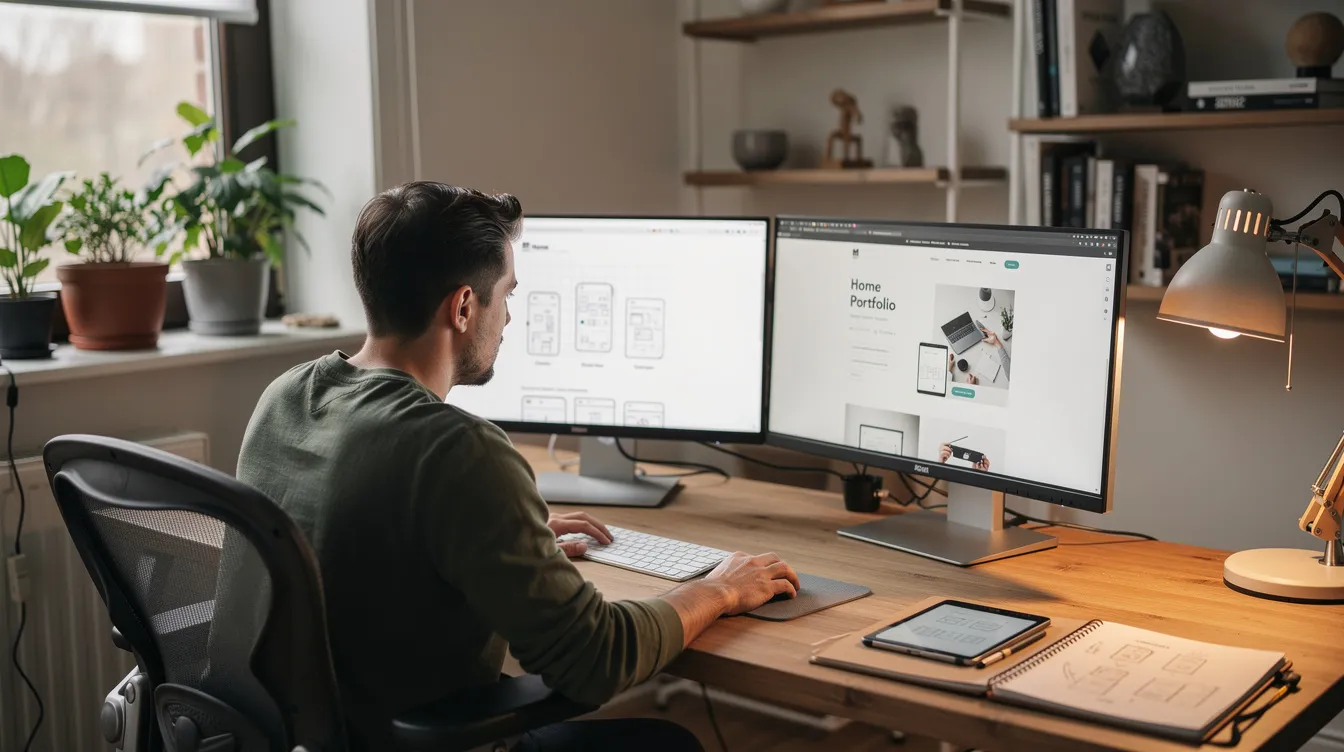
6. Template-Assisted Custom Builds (Semi-Custom Approach)
Semi-custom projects start from a high-quality theme or template, then heavily customize layout, typography, and components to match your brand. Customized templates give a professional appearance without high costs, and they usually cost far less than a fully bespoke build.
Popular site builders such as Squarespace and Wix offer ready templates, built-in SEO tools, and AI website builder features for first drafts. These site builders provide the foundation; the designer’s job is to make the result feel unique.
Why It Stands Out
It reduces design and website development hours by reusing proven frameworks. The result is a professional looking website that feels unique to visitors, especially with custom imagery and copy, at a lower price than a fully bespoke build. Best for: owners who care more about professional polish and mobile optimization than one-of-a-kind layouts, and businesses that need to launch in under a month on a limited budget but want expert help. For small business owners on a deadline, this path can be the best balance of speed and quality.
Key strengths. Proven layouts and components (navigation, forms, galleries) that already work well on all devices. Phones make up about 45% of US web traffic (Statcounter, October 2026), so responsive design is essential, and these templates handle responsive design out of the box. Design hours go into brand expression and messaging instead of rebuilding basic structures, and you can replace sections or entire templates later while keeping content and URLs.
Possible limitations. Theme limits mean some layout requests need heavy custom development. If the provider does minimal customization, your site can still resemble others on the same base. The best cheap website builders and templates only get you partway; the designer’s work on top decides whether the result looks like a professional site.
7. Ultra-Budget “Custom” Offers (When to Proceed With Caution)
This tier includes very cheap “custom website” offers on marketplaces, and low-cost providers that use prebuilt templates with light edits. Some hosting companies advertise starter plans that cost almost nothing in the first year, and some bundle an AI website builder, a free domain and SSL with their plans.
Some of these can serve as stepping stones. Readers need to know what is and is not included at this price point.
Why It Stands Out
An extremely low barrier to entry for businesses that cannot spend four figures yet. It can provide a basic, mobile-friendly, one-page or few-page cheap website that looks acceptable at first glance. Some free plan options even include payment support, so very small businesses can test online sales with almost no upfront cost. Best for: side projects or micro-businesses testing a concept with almost no budget, and owners who understand they will likely replace or rebuild the site later.
Key strengths. A fast launch, often in a few days, and a very low upfront cost. A way to learn what content works before investing in a higher-end custom build. Most website builders at this tier offer a drag and drop editor and visual editor that let non-technical owners experiment with site creation, and many offer a free plan or pricing free of any long commitment.
Possible limitations. Common shortcuts: no basic SEO tools, poor mobile performance, generic copy, and no analytics or security hardening. A paid plan is usually required to remove ads and connect a custom domain. Hidden costs such as upsells for SSL, web hosting, content changes, or “premium support” make the long-term cost less attractive, and a cheap website at sign-up can cost more over 24 months than a mid-range custom build. These offers do not replace affordable website design from a skilled provider. They are a stopgap.
Quick Comparison of Affordable Custom Website Paths
Each option trades off price, uniqueness, and ongoing support. The right website builder or provider depends on where your business sits today and where you plan to be in two years. Here is a scan-friendly summary:
-
Small, strategy-led studio: best for established small businesses that want a flagship site with a strong return.
-
Budget custom packages: best for new or very small businesses that need a credible 3- to 5-page site fast.
-
Design subscriptions: best for teams that need constant new landing pages and brand assets.
-
Niche local specialists: best for law, healthcare, and home services in competitive local markets.
-
Freelancer hybrid: best for owners who want maximum control and value and are willing to manage the build.
-
Semi-custom template builds: best for those happy with proven layouts plus brand customization.
-
Ultra-budget “custom” offers: best as temporary starter solutions when funds are limited.

How to Choose the Right Affordable Custom Web Site Option
The “right” path depends on budget, timeline, technical comfort, and how critical the website is to revenue. No single option fits every business. The sections below break the decision into the three factors that matter most.
Choose Based on Budget and Cash Flow
Start with an honest budget. At the lowest budgets, an ultra-budget offer or a minimal freelancer build gives you a simple website of 1 to 3 pages; most website builders at this level include basic hosting services and a drag and drop builder that covers the essentials. With a moderate budget, budget custom packages, semi-custom template builds, or a more capable freelancer can deliver five pages with custom visuals and a basic SEO setup. This is where many small business sites land. Larger budgets open up strategy-led studios, niche specialists, and extras like copywriting and photography.
One-time project fees work best when you have savings set aside for the build. Subscriptions or monthly plans work better when cash flow is tight but steady.
Put the essentials first: clear messaging, mobile speed, basic SEO, and analytics. Advanced animations, mobile app design, and complex ecommerce features can come later.
Calculate the two- to three-year total cost. A cheap site with monthly hosting, a monthly care plan and a yearly domain can end up costing more over 24 months than a one-time build with simple hosting and updates you handle yourself. Add up every line before you compare.
Compare web design services by what they include, not by name. Two web design services can quote the same price for very different work. Small business sites from a fixed-scope package and small business sites from a studio may look alike in screenshots, so ask for live examples. Check whether a free domain is included, and whether professional services like copywriting are part of the price. Affordable web design is the option that covers what you need without extras you will never use.
Many local businesses still have nothing at all online, which makes even a basic site an advantage. When I read the website field on 6,000 Google Maps listings for nail salons, barber shops and bakeries in 20 US cities, 34.6% had no website of their own (my study).
Choose Based on How Critical the Site Is to Revenue
Define the main goal of the website first, because it decides the features you need. A “digital business card” site that simply confirms you exist needs less investment than a site built to sell online or to serve as your main source of leads.
If your site directly drives appointments, online quotes, or ecommerce sales, invest more in custom UX, copywriting, and conversion focused design to support stronger online sales. Cutting corners on SEO readiness at launch wastes the money spent on design.
For high-stakes roles such as law firm leads, B2B professional services, or medical practice scheduling, niche specialists or strategy-led studios can bring conversion experience that justifies their higher price.
Ultra-budget or builder-only approaches may be enough for low-stakes informational sites: a hobby site, an internal team page, or a temporary stopgap page while your real business plan develops. Search engines reward sites built with proper structure, metadata, and responsive design, so skipping these at launch means rebuilding later.
Choose Based on Your Time and Technical Comfort
Hands-off owners should favor done-for-you studios, niche agencies, or subscription services that handle the build. If a steep learning curve makes you anxious, do not pick an option that requires you to learn a content management system from scratch.
More hands-on owners can get better value from a freelancer or a semi-custom build. If you are comfortable with a drag and drop builder and can follow documentation, you save money by handling updates yourself.
Be honest about whether you will really handle updates, backups, and content. It is easy for small business owners to overestimate their free time. A hosting provider with managed WordPress hosting and automatic updates removes that burden for a modest monthly fee.
Ask each provider what training and documentation they hand over after launch. A good provider gives you a screen-recorded walkthrough or a written guide for your specific site, not a generic link.
Technical support matters after launch. Confirm whether your provider offers ongoing support, what it costs, and how quickly they respond.
Which Affordable Custom Website Path Is Best for You?
Your affordable website decision comes down to three variables: how much you can spend now, how much revenue your site needs to bring in, and how much of the work you want to handle yourself. No single path works for every business, but the patterns are clear enough to map your situation to a recommendation.
For many small business owners, the mid-range options (strategy-led studios, semi-custom builds, or a well-managed freelancer project) give the best long-term value. They produce a professional site that lasts several years, include the web design and technical knowledge needed for search visibility, and cost less per year than constantly patching a cheap build.
Here are the decision shortcuts:
-
Choose a small, strategy-led studio if your website is central to lead generation and you can invest in a full project. This is the right fit for professional services and established small businesses.
-
Choose a budget custom package if you are launching your first small business website and need it live this month. Fixed-scope packages offer affordable web design with a clear list of what is included.
-
Choose a design subscription if you run frequent campaigns and need new landing pages and creative work every month. The flat monthly fee model works for marketing-driven businesses with steady design needs.
-
Choose a niche local specialist if you are in a regulated or competitive industry and want proven playbooks that fit your business plan. The industry focus can pay off in conversion rates.
-
Choose a freelancer hybrid if you enjoy managing projects, want long-term control over your own website, and are willing to spend time finding the right website builder setup and designer.
-
Choose semi-custom template builds if you value speed, polish, and budget balance over totally unique layouts. The best website builder platforms paired with a skilled designer produce a professional looking website at a sharp price.
-
Use ultra-budget offers only as a short-term bridge while you test your idea and save for a stronger build. Plan your upgrade path from day one.
Final Thoughts
“Affordable custom web site” is less about chasing the lowest quote and more about matching the investment to your business goals and the expected lifespan of the site. A modest site that brings steady leads pays for itself faster than a cheaper one that brings none. Where you land in the price range should reflect what the site needs to do for your business, not just what feels comfortable to spend today.
A solid custom site in 2026 should last several years with small improvements. Spread over that time, even a mid-range build costs little per month compared with the work it does as your main sales tool.
An affordable custom website is a business tool first. Judge every affordable custom website quote by the work it will do for you. The practical next step: shortlist 2 to 3 options from this article, gather written quotes from each, and compare not just price but process, scope, and post-launch support. Ask what the hosting plan includes, whether you own your website files, and what happens if you move to a different hosting provider or designer. Those questions reveal more about long-term value than the bottom-line number on a proposal.
Acting with a clear plan now beats waiting for the “perfect” budget or tech stack. You gain more from web design services in 2026 if you launch a focused, well-built site and improve it quarter by quarter, instead of comparing website builders in a browser tab six months from now. You can see what I offer to different kinds of businesses on my industry pages. If you have a question about your own site, write to me.